
Braun has an extraordinary history in industrial design, particularly in audio equipment. Its radios, turntables, amplifiers and speakers are as interesting visually as they are as pieces of technology.
I travelled to Berlin to photograph the Braun-Sammlung Ettel, a specialist collection of Braun products, using a combination of still photography, environmental portraits and a high-resolution 360 virtual tour.
As a commercial photographer with a background in advertising art direction, I've always been interested in how products are designed, how they look and how they're presented. The Braun collection was a particularly interesting place to explore that relationship.
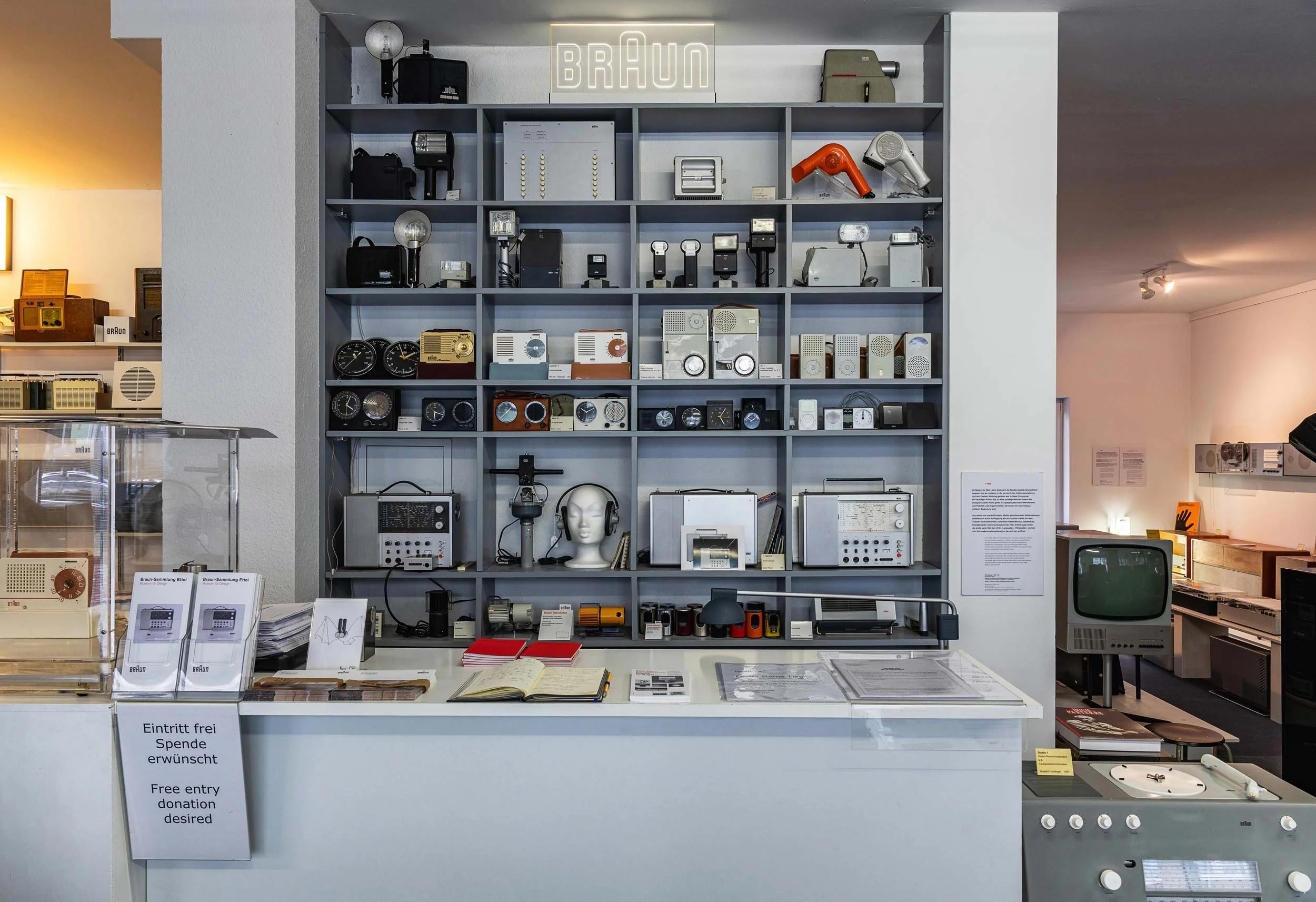
A selection of Braun products from different decades, photographed at the Braun-Sammlung Ettel in Berlin.
Inside the Braun-Sammlung Ettel
The Braun-Sammlung Ettel was established by Werner Ettel, a former art teacher with a long-standing interest in Braun's approach to product design.
It brings together decades of Braun products, including audio equipment, televisions, cameras, clocks and domestic appliances.
What makes the collection particularly interesting is the way everything is displayed. Rather than presenting a handful of objects in a minimal exhibition, the rooms are packed with products from different periods, often arranged alongside related designs.
It's possible to see how Braun's products developed over time, from the overall forms and proportions to smaller details such as controls, materials and typography.
For a photographer, it's a fascinating environment, with something interesting in almost every direction.
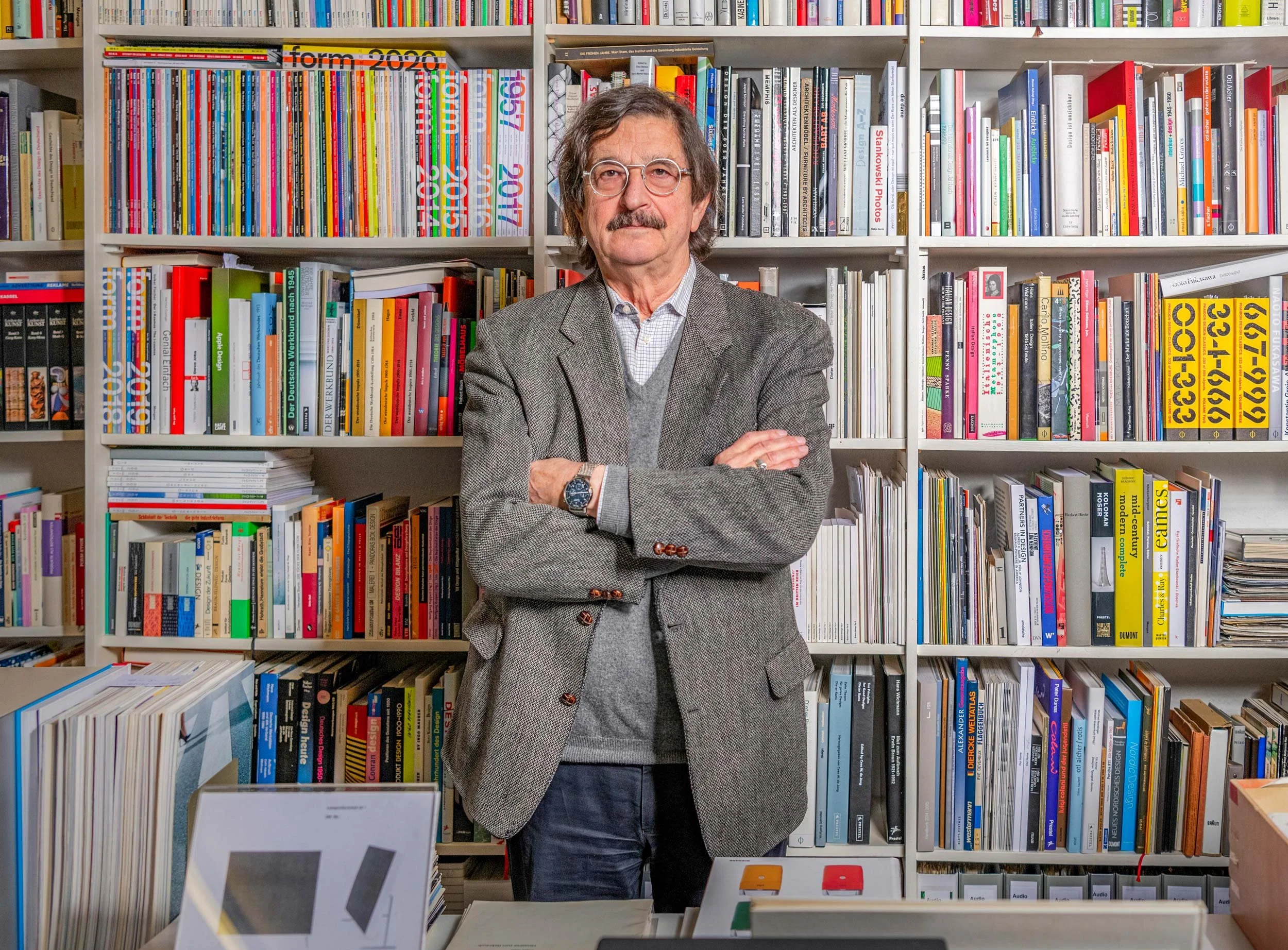
Werner Ettel, founder of the Braun design collection, photographed among the books and reference material.
Photographing Braun's Audio Equipment
The audio equipment was one of the main reasons I wanted to photograph the collection.
Braun's historic radios, receivers, turntables and speakers have a distinctive visual language. The designs often appear simple at first glance, but the proportions, materials and arrangement of the controls have clearly been carefully considered.
Photographing these products in the collection was very different from photographing individual items in a controlled studio environment.
The equipment was surrounded by other objects, with shelves, displays and reflections all influencing the compositions. I wanted to concentrate on the individual products and their design details without losing the character of the space.
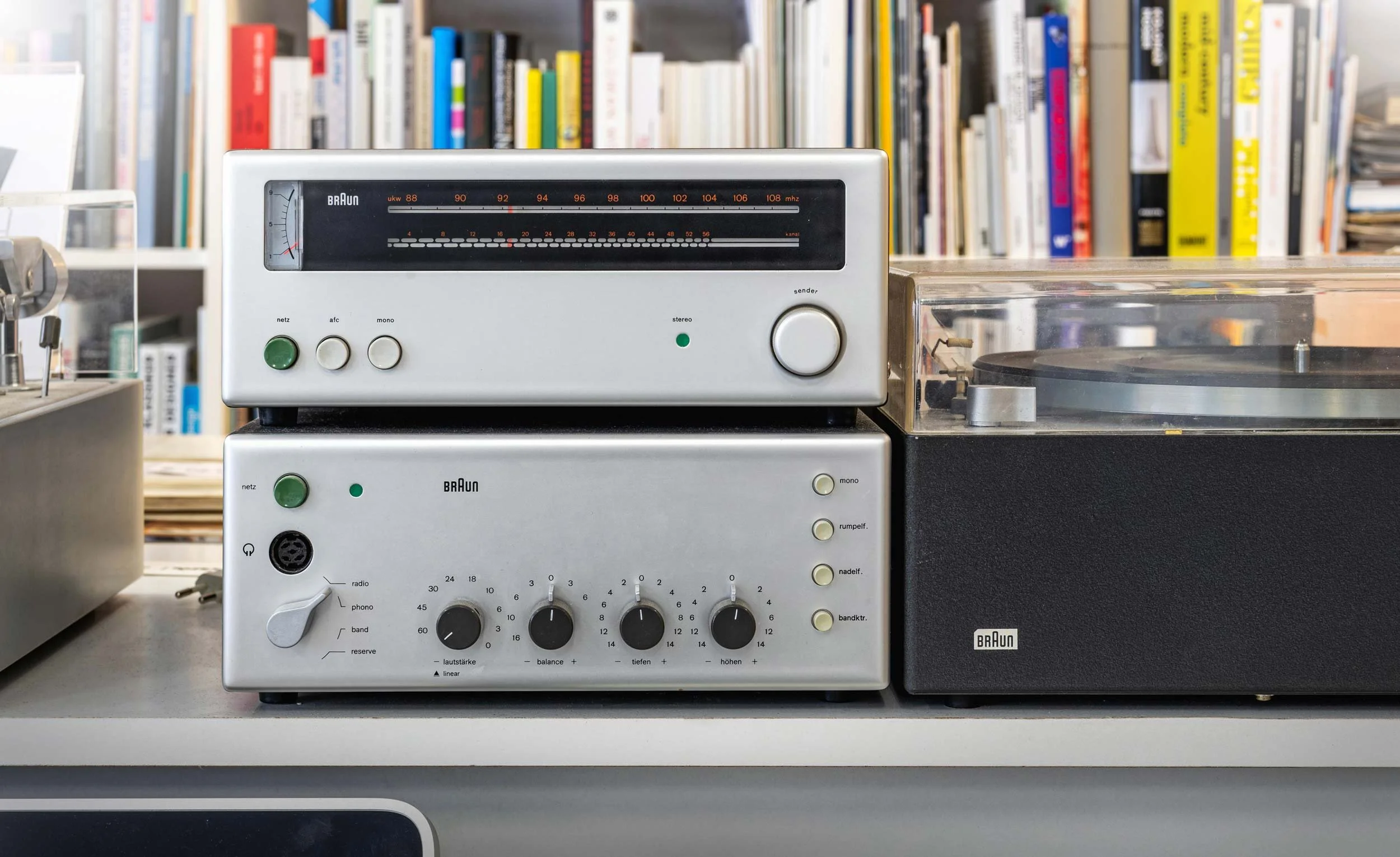
Historic Braun audio equipment photographed within the design collection, with attention to the products' forms, materials and details.
Looking more closely at the equipment, it's the smaller details that become particularly interesting: the typography, tuning scales, buttons and controls, and how the different components work together visually.
These details are an important part of product photography. Whether photographing a historic piece of audio equipment or a contemporary product for a manufacturer, understanding what makes the design distinctive helps determine how best to photograph it.
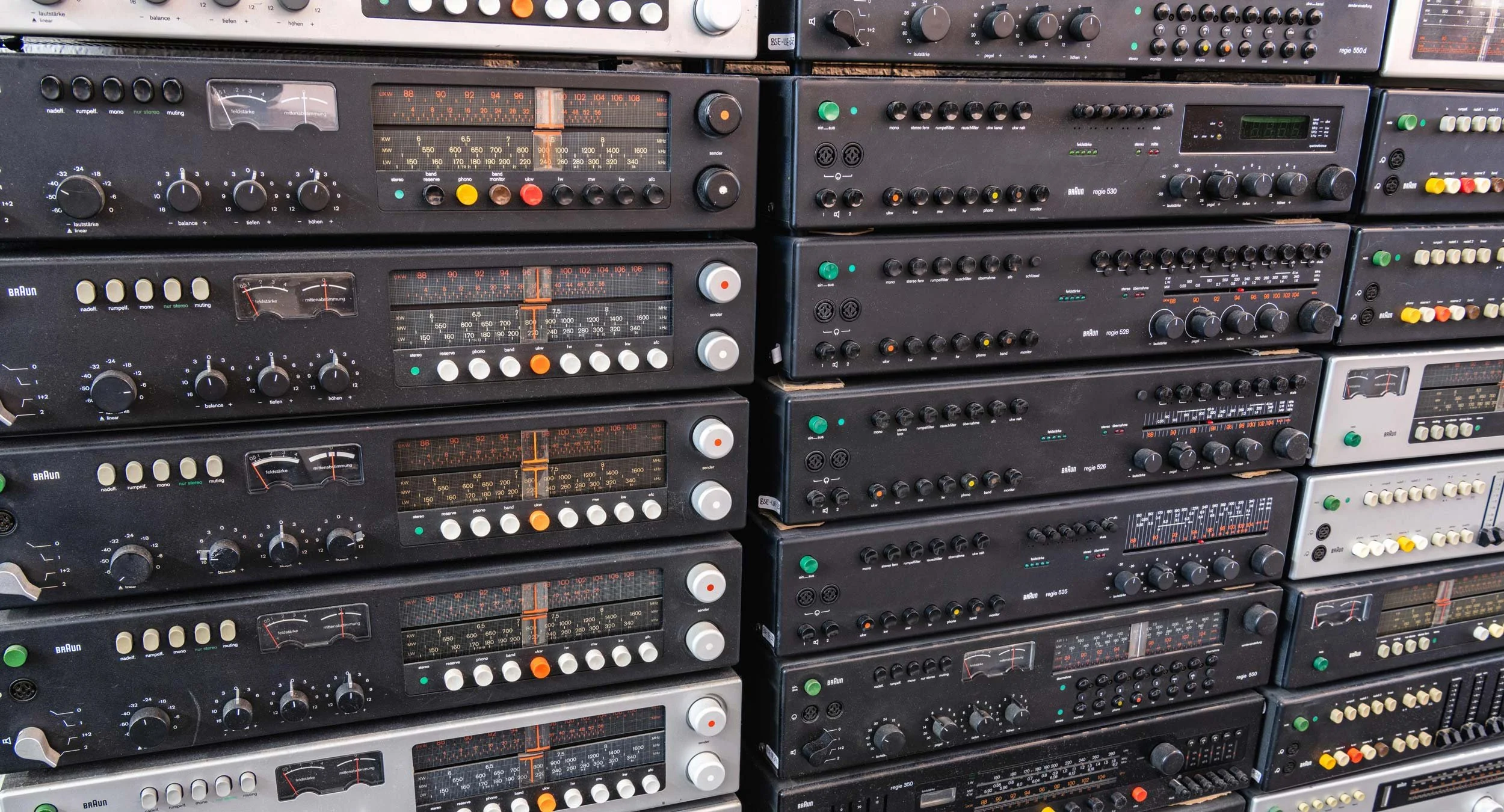
A closer look at the typography, tuning scales and controls of Braun's historic audio equipment.
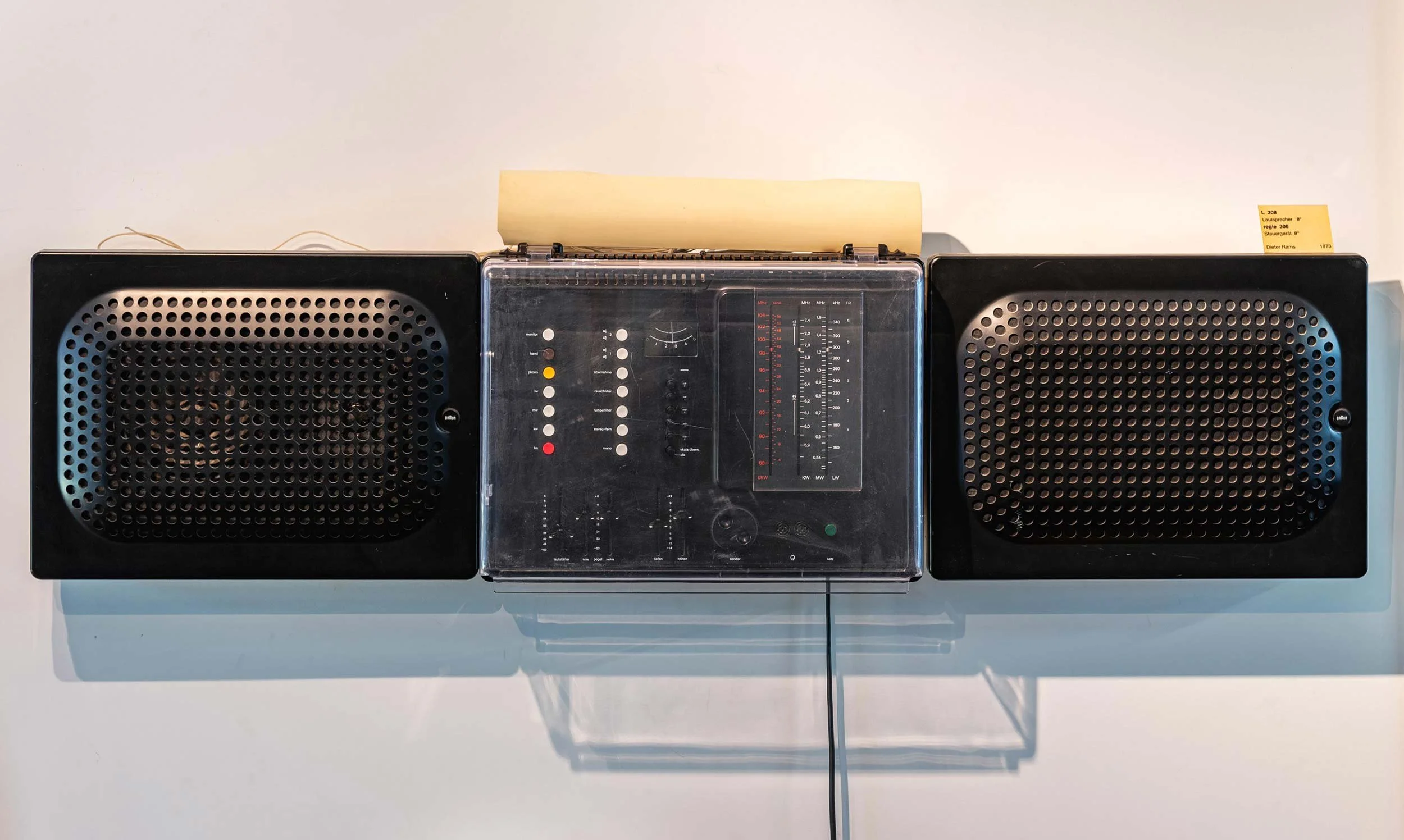
A wall-mounted Braun audio system, showing the simple forms and arrangement of its components.
The People Behind the Collection
Alongside the products, I photographed Werner Ettel and Simon Krohn during my visit.
I enjoy environmental portrait photography because it gives the viewer more information about a person than a conventional headshot. The surroundings become part of the photograph, helping explain someone's interests, work or connection to a particular place.
In this case, photographing people among the historic Braun equipment and design books helped connect the objects with the individuals involved in the collection.
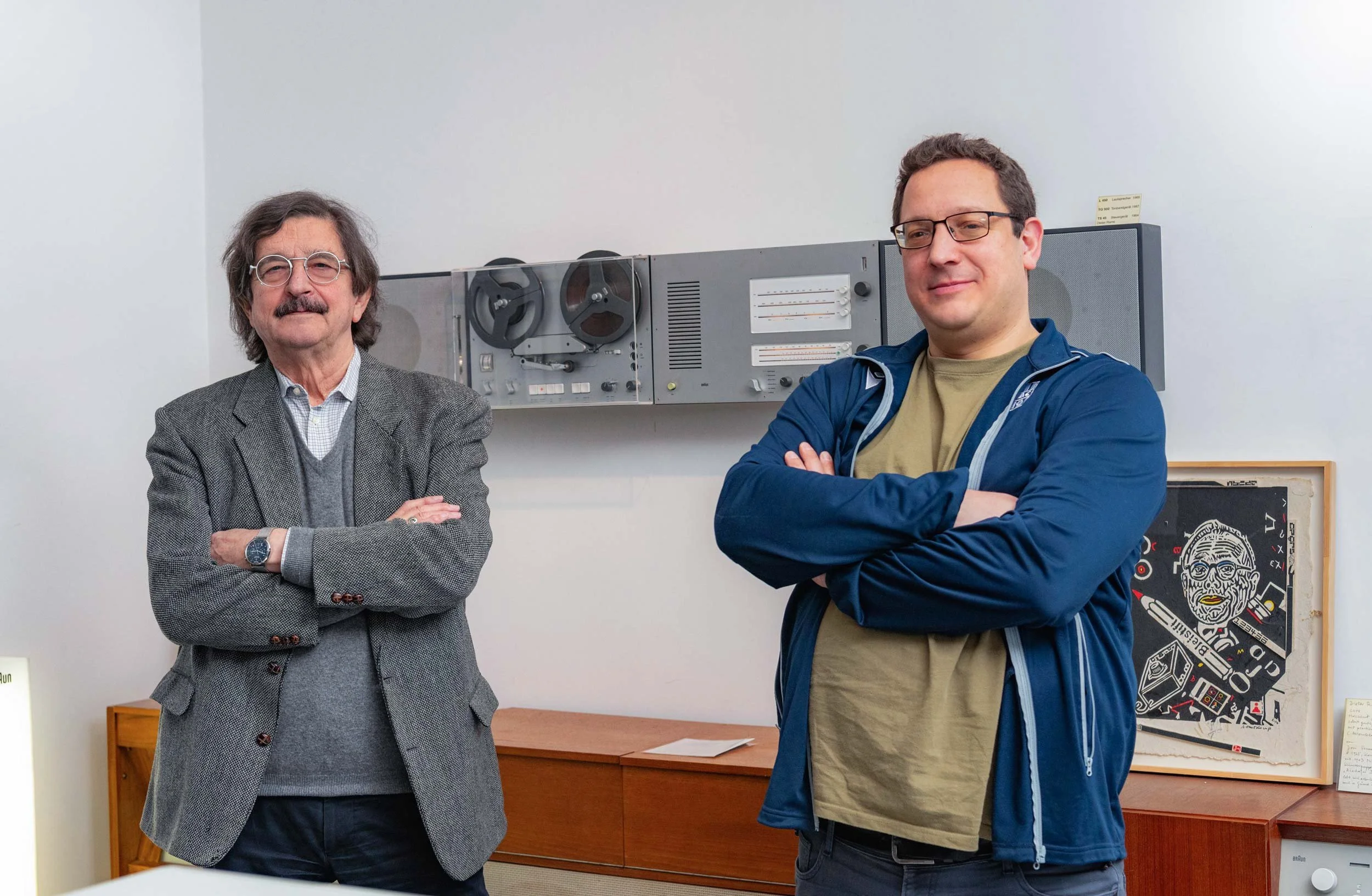
Werner Ettel and Simon Krohn alongside part of the collection's historic audio equipment.
Exploring the Braun Design Collection in 360
Alongside the still photographs, I created an interactive 360 virtual tour of the collection.
The still images allow me to concentrate on individual products, design details and portraits. The 360 photography serves a different purpose, allowing viewers to explore the rooms and understand how the collection fits together.
This is particularly valuable in a space like the Braun-Sammlung Ettel, where the sheer number and variety of objects are such an important part of the experience.
Visitors can move between viewpoints, look around the rooms and explore the displays in their own time.
Combining Still Photography and 360 for Design Collections
Photographing the Braun collection was a good example of how conventional photography and 360 can complement one another.
Stills are ideal for drawing attention to particular products, materials and design details, as well as the people associated with a collection. A connected 360 tour provides a wider view, showing the arrangement of the objects and how the space works as a whole.
Together, the two formats create a more complete photographic record.
For museums, galleries, manufacturers and organisations with important collections, this approach can be useful for documentation, websites, exhibitions and marketing.
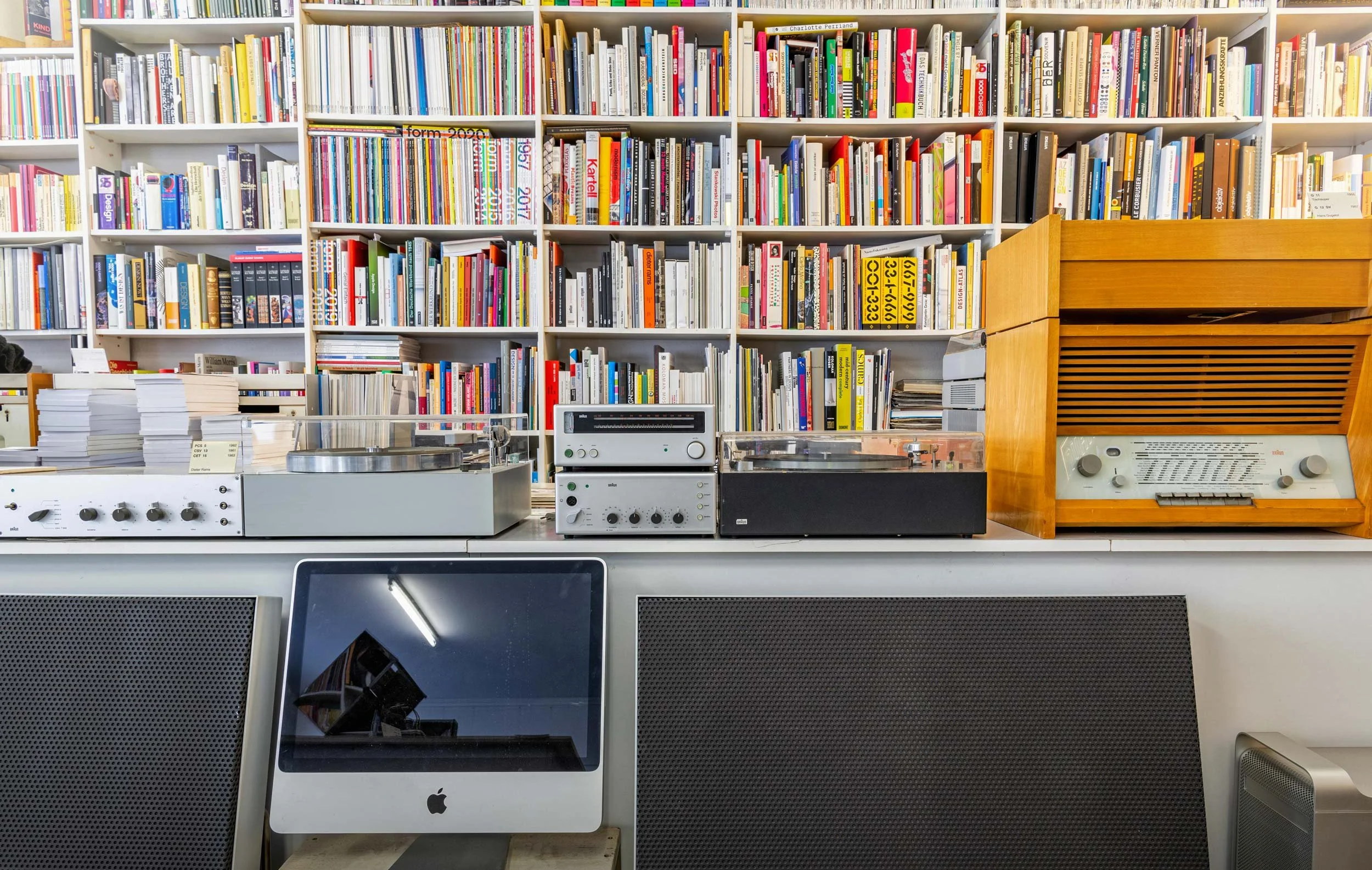
Vintage Braun turntables, receivers and other audio equipment photographed as part of a wider industrial design collection in Berlin.
Commercial Photography for Products, Design and Specialist Spaces
The Braun collection brought together several areas of photography that I particularly enjoy: products, industrial design, environmental portraits and interiors.
My work as a London-based commercial photographer takes me across the UK and internationally, photographing for brands, agencies and businesses.
I'm particularly interested in working with manufacturers, audio brands and design-led companies that need photography of their products, people or spaces.
You can explore more of my commercial photography, product photography and 360 virtual tour photography.
If you have a product range, collection or specialist space you'd like photographed, get in touch to discuss the project.